
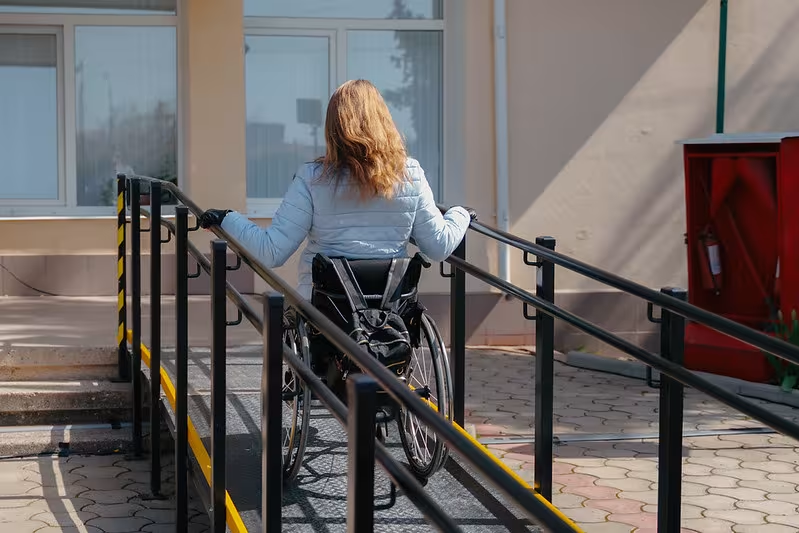
"There is no progress without respect for human rights!"
Access to voting is a fundamental right. For this right to be exercised under equal conditions, it is not sufficient for a polling station to exist: the voter must be able to reach the building, enter, move inside, and arrive at the voting room without physical barriers. The accessibility audit transforms these issues from impressions into data and can provide authorities with a starting point for concrete interventions.
The situation in the Florești Electoral District in numbers
The data from the evaluation table analyzed for the Florești Electoral District includes 70 polling stations. Of these, 7 (10.0%) are classified as accessible, 8 (11.4%) as partially accessible, and 55 (78.6%) as inaccessible.
Therefore, only 15 out of the 70 polling stations (21.4%) have been categorized into one of the two categories indicating a certain level of accessibility. In contrast, 55 out of 70 buildings (78.6%) have been classified as inaccessible.
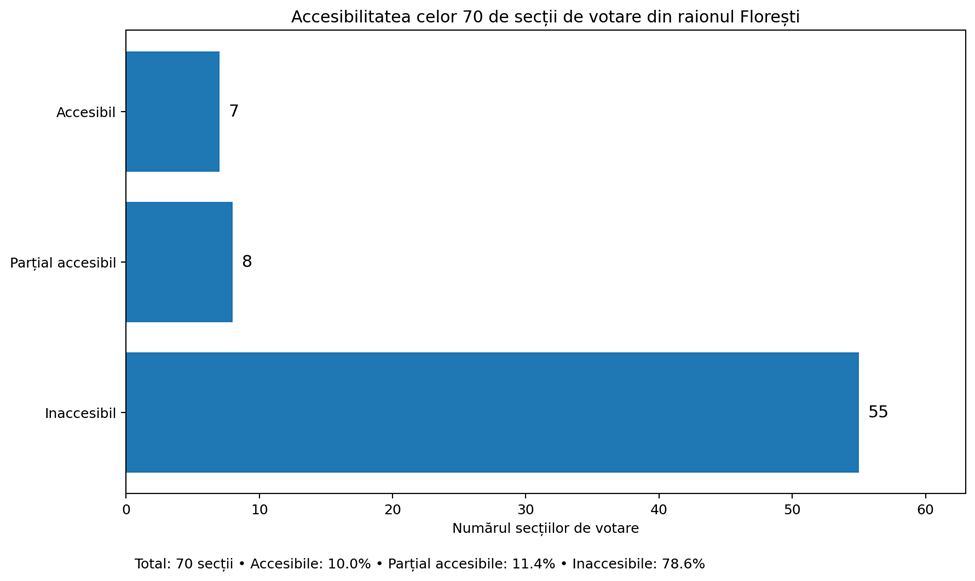
Chart 1. Distribution of the 70 polling stations by overall accessibility level.
Why do these numbers matter?
A building classified as inaccessible may mean that a person with reduced mobility cannot safely reach the entrance or cannot overcome steps, thresholds, or other obstacles. The issue is not limited to wheelchair users. Accessibility is also important for elderly individuals, people with temporary mobility difficulties, parents with strollers, and others for whom steps or uneven surfaces represent real barriers.
The results from the Florești Electoral District thus indicate a problem that must be viewed in the broader context of the accessibility of electoral infrastructure in the Republic of Moldova.
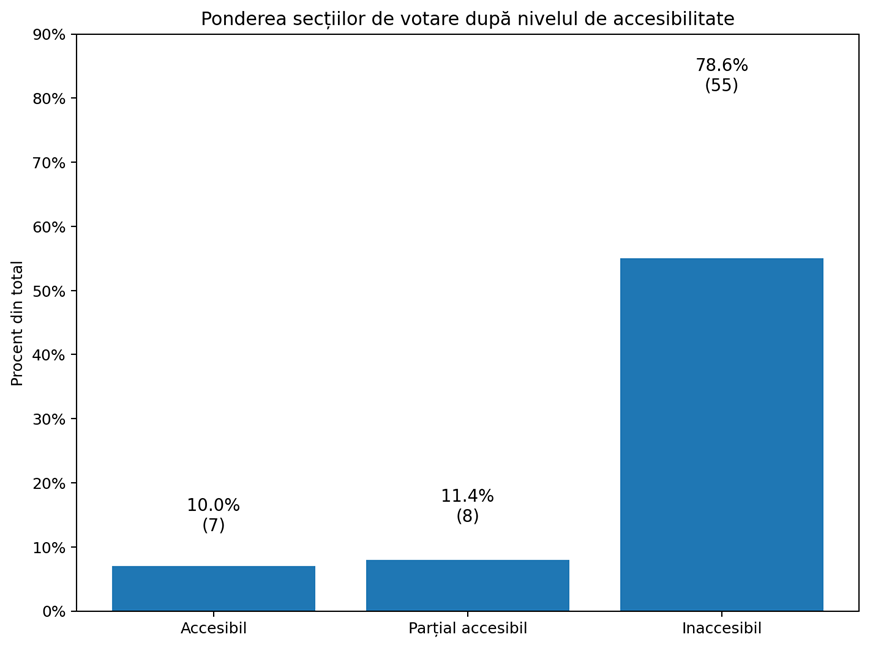
Chart 2. Proportion of each accessibility category in the Florești Electoral District.
Accessibility does not just mean a ramp
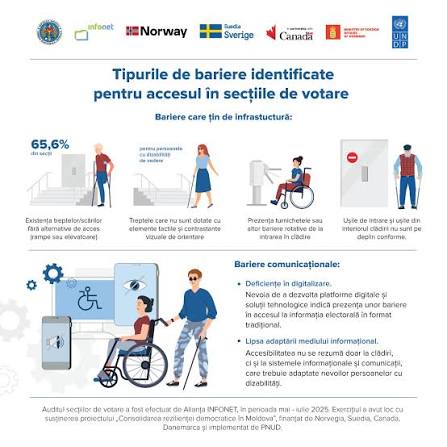
The accessibility assessment looks at multiple elements of the route to and inside the polling station. In such evaluations, among other things, the access path, steps and ramp, entrance door, hallways or corridors, voting room, and, where applicable, the restroom are analyzed. A ramp installed at the entrance is an important intervention, but it does not automatically make the entire building fully accessible.
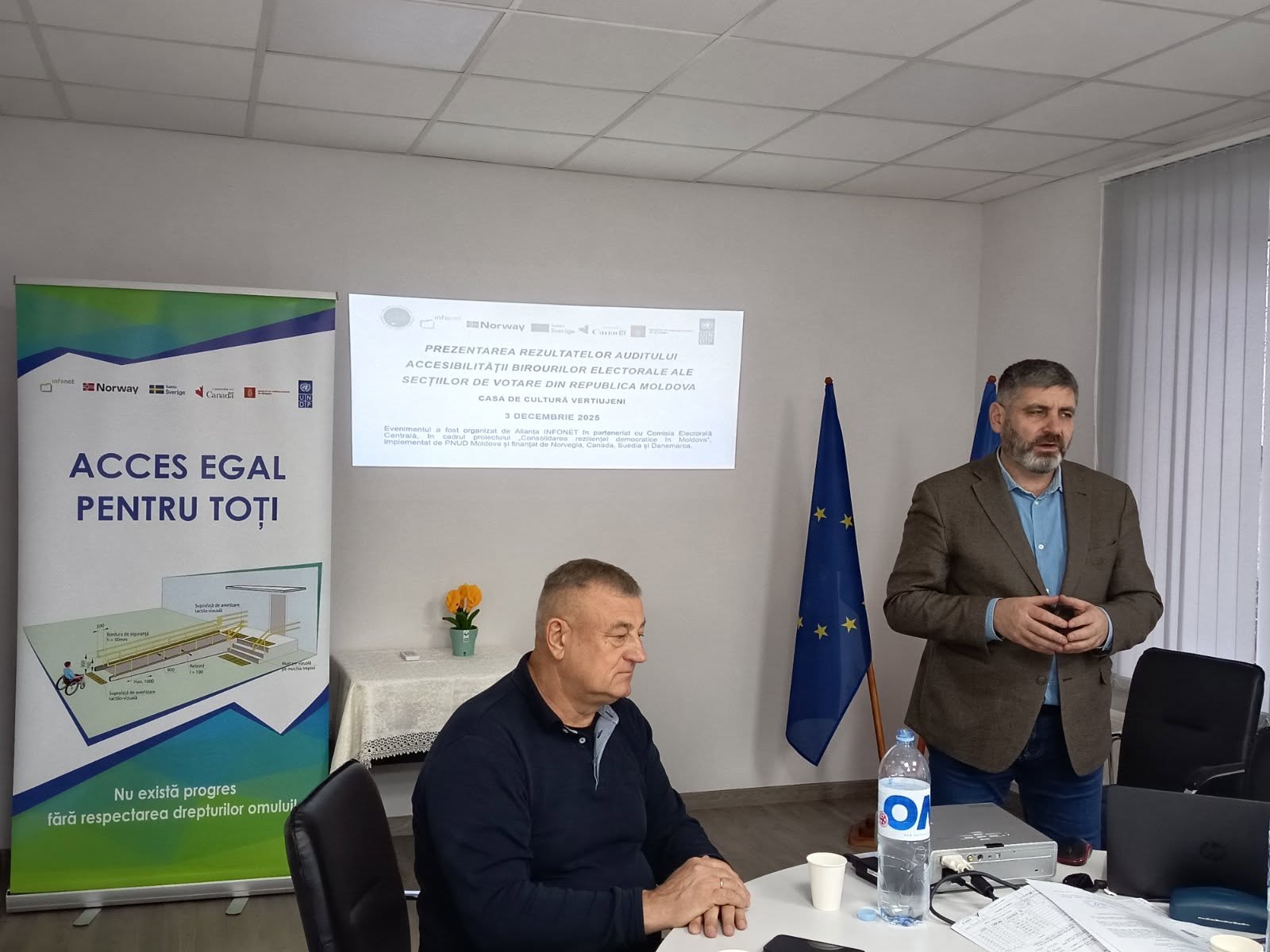
Vertiujeni: an example where the audit can produce change
In the evaluation table analyzed, BESV 18/69 from Vertiujeni village, located in the Cultural House, is listed in the "Inaccessible" category. This finding is important not only as a statistic but also as a starting point for intervention.
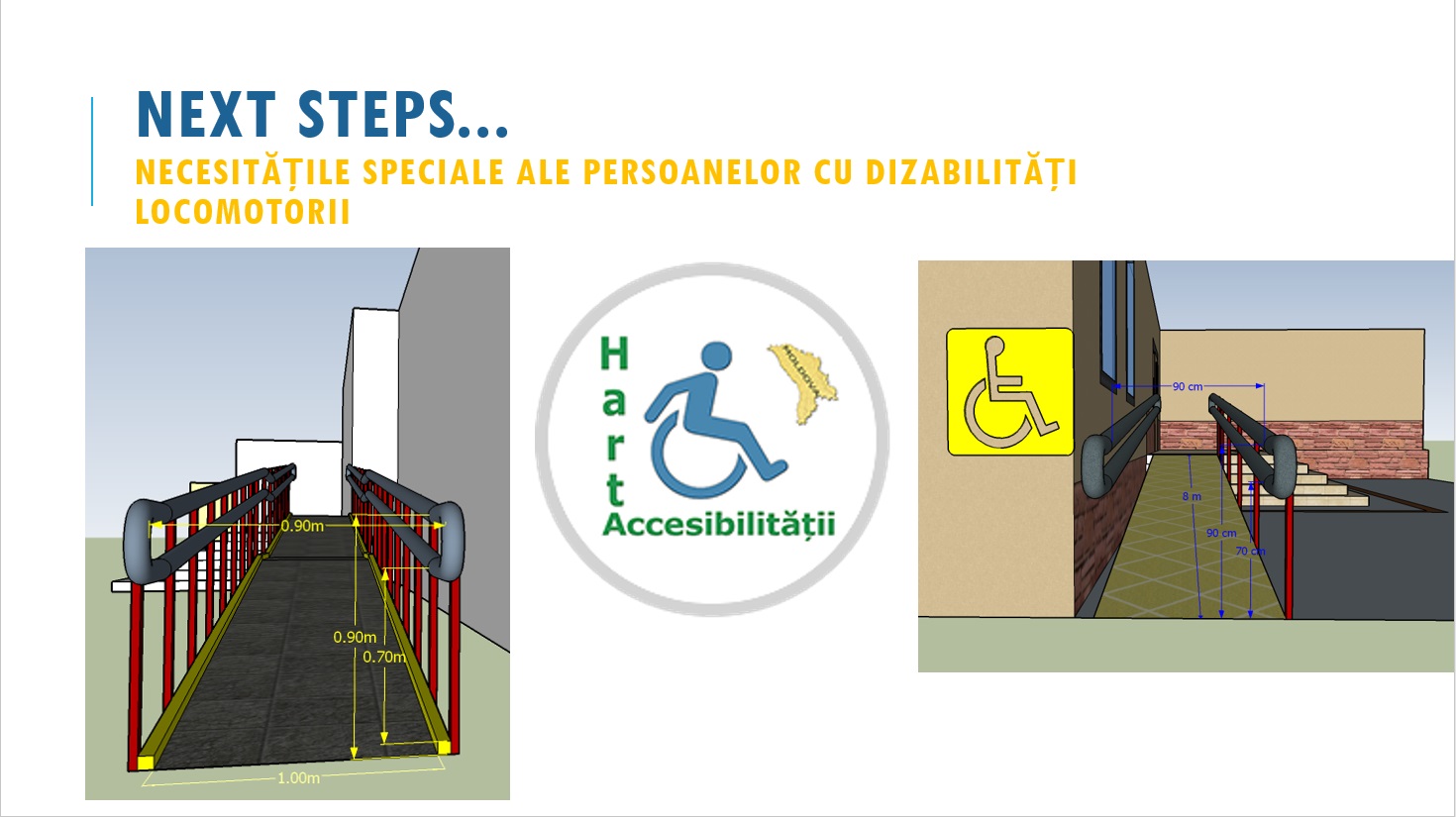
The materials presented in the "Equal Access for All" campaign show that, following the accessibility assessment, an access ramp was built at the Cultural House in Vertiujeni. Thus, an obstacle identified during the audit was followed by a concrete solution in infrastructure.
Photographs of the situation and the ramp project illustrate very well the difference between merely noting a barrier and the actual intervention. It is a relevant example for local communities: the audit has value when the collected data is transformed into decisions, projects, and works that reduce barriers.
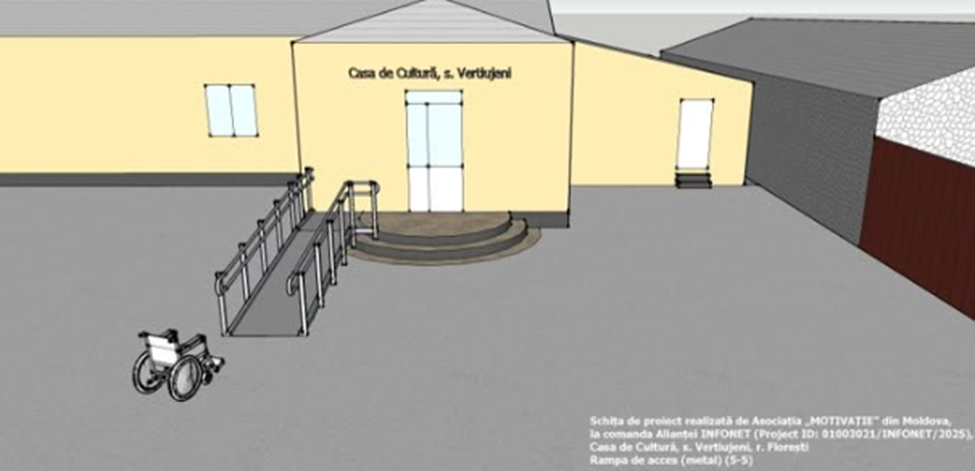
Image. The project for the construction of the access ramp at the Cultural House in Vertiujeni, presented in the campaign materials.
From statistics to action
The 55 buildings classified as inaccessible should not be viewed merely as a number. Each of them represents a concrete situation, with specific barriers and, in many cases, with solutions that can be designed and phased. Some interventions may be relatively simple - for example, removing a threshold or constructing a ramp - while others may require more complex works.
An effective approach could start from prioritizing buildings: polling stations with the highest barriers, buildings serving a large number of voters, public institutions frequently used by the community, and locations where a relatively small intervention can have a significant impact.
What should follow?
- Re-evaluation of buildings where accessibility works have been carried out.
- Transparent publication of results before and after intervention.
- Establishment of intervention priorities for polling stations classified as inaccessible.
- Designing ramps and other accessibility elements according to technical requirements, not just as temporary solutions.
- Checking the entire route of the voter: from external access to the voting room.
- Involving persons with disabilities in the practical verification of the implemented solutions.
Conclusion
The data from the Florești Electoral District reveal a reality that cannot be ignored: out of 70 analyzed polling stations, 55 have been classified as inaccessible. Only 7 have been considered accessible, and another 8 partially accessible. Behind these numbers are people for whom a staircase, a threshold, a narrow door, or an uneven access path can become a barrier to exercising a fundamental right.
At the same time, the case of Vertiujeni shows that the situation is not without solutions. If the audit identifies the problem, and authorities and the community intervene, change can become visible. The construction of the ramp at the Cultural House in Vertiujeni is, in this sense, more than just an infrastructure project: it is an example of how data can be transformed into action.
Accessibility should not be a measure taken only before elections. Public buildings are used every day, and removing physical barriers means a more open and inclusive community for all.
Author: Beiu Minodora, Balan Ion
This text was translated using machine translation using AI translator based on OPENAI